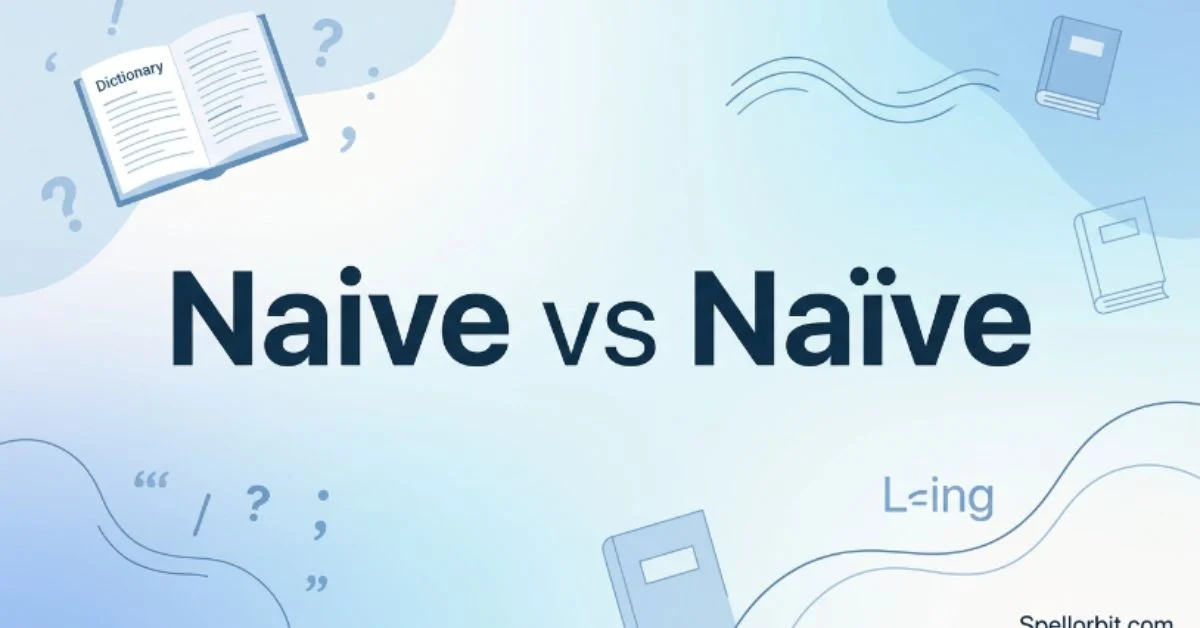
The words “naive” and “naïve” often confuse English learners, writers, and even native speakers. Many people search this keyword because they are unsure which spelling is correct and whether both mean the same thing.
This confusion usually happens in emails, essays, social media posts, and professional writing where spelling accuracy matters.
The word describes a person who is simple, innocent, or lacking experience. But small differences in spelling and usage can change tone, style, or formality. Some writers think one is British and the other is American, while others are not sure about pronunciation or correctness.
In this article, you will learn the meaning, pronunciation, origin, usage, and correct spelling rules of this commonly confused word.
Quick Answer
Naïve and naive mean the same thing.
The only difference is spelling style:
- Naïve → Traditional spelling (with diaeresis “ï”)
- Naive → Modern simplified spelling (most common today)
Example:
- She was naive to trust strangers online.
- He looked naïve but was very smart.
👉 Both are correct. “Naive” is more widely used in modern writing.
Pronunciation of Naive / Naïve
The pronunciation stays the same for both spellings:
- IPA: /naɪˈiːv/
- Sounds like: nye-eve
Simple breakdown:
- “Nye” → like “night” without “t”
- “Eve” → like evening
Even though the spelling changes, the sound does not.
Why People Confuse Naive or Naïve
People confuse these spellings for several reasons:
- The diaeresis (¨) in naïve looks unusual in English
- Many modern texts remove special marks
- Both forms appear in books and online content
- Similar words like résumé or coöperate create confusion
Linguistically, this is a case of Cognitive bias, where the brain assumes different spelling means different meaning.
In reality, both forms refer to the same concept.
The Origin of Naive or Naïve
The word comes from French:
- French: naïf / naïve
- Latin root: nativus (meaning “natural, native, born simple”)
Over time, English adopted the word and simplified it:
- Old form kept the two dots (diaeresis)
- Modern English dropped them for simplicity
Related forms:
- Naivety
- Naïveté
The meaning stayed the same, only spelling evolved.
British English vs American English Spelling
Unlike many words, “naive/naïve” is NOT strictly divided by region.
Both US and UK use:
- Naive (more common today)
- Naïve (formal, literary style)
Comparison Table
| Feature | Naive | Naïve |
|---|---|---|
| Style | Modern English | Traditional French style |
| Usage | Most common globally | Less common, formal texts |
| Pronunciation | Same | Same |
| Meaning | Innocent, inexperienced | Innocent, inexperienced |
So this is not a strict Naïve realism case of regional difference—it is more about writing style.
Which Spelling Should You Use?
Choose based on your audience:
- Global blogs / SEO / digital writing: Use naive
- Literature / academic / stylistic writing: You can use naïve
- UK or US audience: Both are acceptable, but naive is safer
👉 Recommendation:
If you are unsure, always use naive.
Common Mistakes with Naive or Naïve
Here are frequent errors:
❌ Writing “naïv”
✔ Correct: naïve / naive
❌ Thinking they have different meanings
✔ Both mean the same thing
❌ Pronouncing differently
✔ Both are pronounced the same
❌ Using accent marks randomly in English
✔ Only use “ï” in formal or stylistic writing
Other related confusion words:
- Gullible
- Simple-minded
- Unsophisticated
Naive or Naïve in Everyday Examples
Emails:
- “It would be naive to assume no risks exist.”
Social Media:
- “Don’t be naive about online scams.”
News Writing:
- “The policy was based on a naive assumption of stability.”
Formal Writing:
- “His naïve optimism influenced the decision.”
Related concept:
- Innocence
Easy Trick to Remember Naive or Naïve
Here is a simple memory trick:
👉 “If you see two dots (ï), think international or old style.”
- Naïve → traditional / formal / French-style spelling
- Naive → modern / everyday English spelling
Another trick:
- “Simple word = simple spelling → Naive”
This helps you remember without confusion.
Naive or Naïve – Google Trends & Usage Data
Search behavior shows:
- “naive meaning” → very high global searches
- “naive or naïve difference” → rising queries in education niches
- “naive spelling UK US” → common among students
Key insight:
- English learners mostly search this during writing tasks
- SEO content creators use “naive” more often for ranking
Overall trend:
Modern digital writing strongly prefers naive, while academic and literary sources still preserve naïve.
Comparison Table: Naive Variations
| Variation | Type | Usage |
|---|---|---|
| naive | Standard English | Most common today |
| naïve | French-style spelling | Formal/literary |
| naivety | noun | lack of experience |
| naïveté | French noun form | academic/literary |
FAQs
1. Are naive and naïve the same?
Yes, both words have the same meaning and pronunciation.
2. Which spelling is correct?
Both are correct, but “naive” is more commonly used today.
3. Is naïve British and naive American?
No strict rule exists. Both are used in US and UK English.
4. What does naive mean?
It means innocent, simple, or lacking experience or judgment.
5. How do you pronounce naive?
It is pronounced as /naɪˈiːv/ (nye-eve).
6. Is naive a negative word?
Sometimes yes, but it can also mean innocent or pure.
7. Should I use naïve in formal writing?
You can, but modern writing usually prefers “naive”.
Conclusion
The confusion between naive and naïve is very common, but the meaning is simple. Both spellings refer to a person who is innocent, inexperienced, or trusting.
The difference is only in writing style, not meaning or pronunciation. Modern English prefers the simplified form “naive,” while “naïve” is used in traditional or formal contexts.
Understanding this small difference helps improve writing accuracy and avoids mistakes in academic, professional, and online content.
Once you remember that both forms are equal in meaning, the confusion disappears. Just choose the version that fits your audience and writing style. In most everyday cases, “naive” is the safest and most widely accepted option.